A Ranthambore safari is an exciting opportunity to explore one of India’s most famous tiger reserves and observe wildlife in its natural habitat. But because Ranthambore is a protected wildlife area, visitors must follow specific rules and responsible tourism practices during their safari.
Following the rules is not only important for your own safety but also helps protect tigers, leopards, deer, birds, and the entire forest ecosystem.
The Rajasthan Forest Department manages safari permits and entry into Ranthambore Tiger Reserve, while national tiger-tourism guidelines provide important standards for responsible tourism.
Whether you’re visiting Ranthambore for the first time or planning another wildlife adventure, this guide explains the most important Ranthambore safari rules and guidelines every visitor should know.
Why Are Ranthambore Safari Rules Important?
Ranthambore is not a zoo. Wildlife moves freely throughout the forest, and animals need space to behave naturally.
Tourism is therefore regulated to:
- Protect wildlife
- Reduce disturbance
- Control visitor numbers
- Maintain safe distances
- Protect the forest ecosystem
- Provide a responsible wildlife experience
The NTCA guidelines state that tourism activities should remain within designated tourism areas and that visitor and vehicle numbers should be controlled according to the carrying capacity of the reserve.
1. Carry a Valid Safari Permit
Visitors must have the required permit to enter the national park for safari activities.
The Rajasthan Forest Department provides an official online booking and permit service for Ranthambore Tiger Reserve.
Before your safari, make sure you have:
- Valid safari booking confirmation
- Required identification
- Correct passenger details
- Safari date and shift information
Keep your booking information available for verification.
2. Carry the Required Original ID
Always carry the valid identification document required for your booking and verification.
Before leaving your hotel, check:
- Name on booking
- ID details
- Passport, if applicable for international visitors
- Booking confirmation
Avoid entering incorrect information while making your reservation.
The official Rajasthan Forest Department booking system provides the procedure for advance wildlife permit booking and visitor details.
3. Enter the Park Only Through Authorized Safari Arrangements
Private vehicles cannot simply enter Ranthambore National Park for tourism.
Rajasthan’s wildlife rules specify that entry into the national park requires a permit, and tourism vehicles are subject to authorization and park regulations.
Visitors should therefore use the authorized safari system and follow instructions from park authorities.
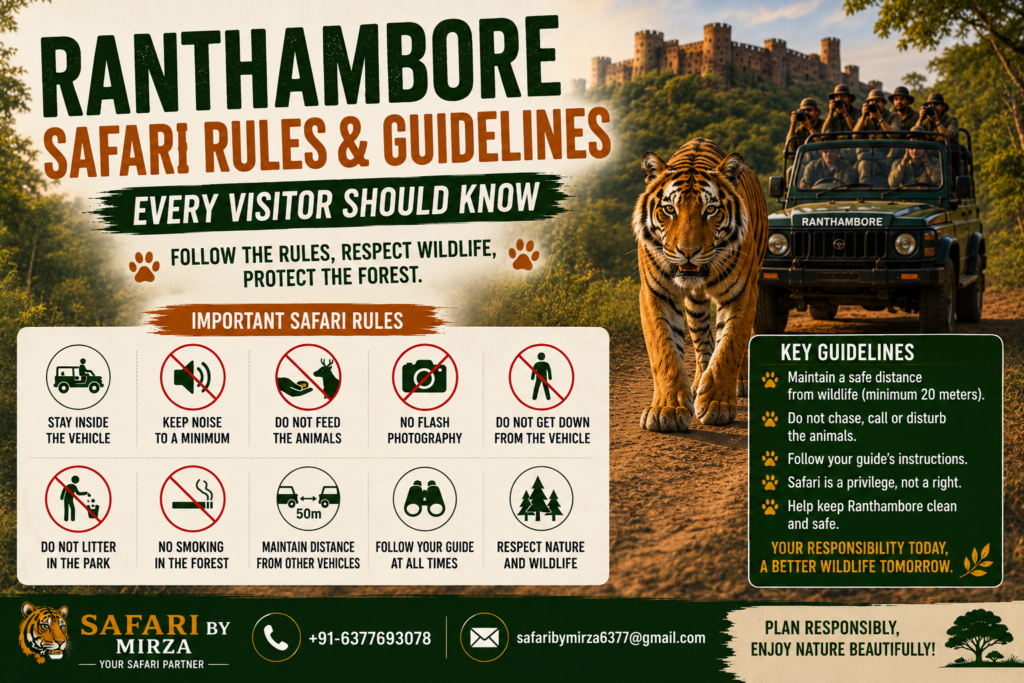
4. Stay Inside the Designated Safari Vehicle
During your safari, remain inside the designated safari vehicle unless your authorized guide or park authorities specifically instruct otherwise.
Do not:
- Get out to take photographs
- Stand on seats
- Lean dangerously outside the vehicle
- Approach animals on foot
Wild animals can react unpredictably, even when they appear calm.
Your guide and driver are trained to manage the safari safely.
5. Maintain a Safe Distance From Wildlife
One of the most important wildlife tourism rules is maintaining an appropriate distance from animals.
The NTCA tourism guidelines specify a minimum distance of more than 20 metres from wildlife and prohibit activities such as feeding, luring, or disturbing animals.
Never ask your driver to move dangerously close to a tiger or other animal simply to get a better photograph.
A respectful distance protects both visitors and wildlife.
6. Never Feed Wild Animals
Feeding wildlife is strictly inappropriate.
Never offer food to:
- Tigers
- Deer
- Monkeys
- Birds
- Crocodiles
- Any other wild animal
Feeding can alter natural animal behavior and create dependence or conflict.
Let wildlife find its own natural food within the ecosystem.
7. Do Not Call, Chase, or Disturb Animals
Never try to attract an animal’s attention.
Avoid:
- Shouting
- Whistling
- Making animal sounds
- Throwing objects
- Chasing animals
- Blocking their movement
- Asking the driver to follow an animal aggressively
Wildlife sightings should be observed quietly and respectfully.
8. Do Not Use Flash Photography Near Wildlife
Wildlife photography requires patience.
Avoid using flash when photographing animals, particularly at close range.
Instead:
- Use natural light
- Increase camera ISO when necessary
- Use a suitable telephoto lens
- Follow your guide’s instructions
Your goal should be to capture wildlife without disturbing it.
9. Keep Noise to a Minimum
Silence is one of the best tools for wildlife watching.
Keep conversations quiet and avoid:
- Loud music
- Shouting
- Phone speakers
- Sudden noises
A quiet safari can also help you notice natural sounds such as bird calls and alarm calls from deer or langurs.
10. Never Throw Anything Into the Forest
Do not litter inside the park.
Never throw:
- Plastic bottles
- Food wrappers
- Tissues
- Cigarette packets
- Plastic bags
- Any other waste
Carry your waste back with you and dispose of it appropriately.
Protecting the forest means leaving it exactly as you found it.
11. Do Not Smoke or Use Fire in the Forest
Fire can be extremely dangerous in dry forest environments.
Avoid smoking or carrying out activities that could create fire hazards.
Always follow the instructions provided by the park authorities and your safari team.
12. Follow Your Guide and Driver's Instructions
Your safari guide and driver are there to help you enjoy the forest safely.
Listen to them when they advise you to:
- Stop
- Move away
- Remain quiet
- Stay inside the vehicle
- Maintain distance
- Continue driving
They understand the terrain, wildlife behavior, and park procedures better than first-time visitors.
13. Do Not Block Other Safari Vehicles
Tiger sightings can attract several safari vehicles.
However, visitors should avoid creating unnecessary congestion or disturbing the animal.
NTCA guidelines state that vehicles should maintain a minimum distance of 50 metres from one another while spotting wildlife, and a vehicle should not monopolize a wildlife sighting for more than 15 minutes.
This helps provide fair viewing opportunities and reduces pressure on wildlife.
14. Do Not Expect a Guaranteed Tiger Sighting
Ranthambore is famous for its Royal Bengal Tigers, but tiger sightings are never guaranteed.
A tiger may:
- Remain hidden
- Move into dense vegetation
- Change territory
- Rest away from safari routes
- Appear for only a few minutes
Instead of focusing only on tigers, enjoy the complete wildlife experience.
You may also see:
- Leopard
- Sloth bear
- Sambar deer
- Chital
- Nilgai
- Wild boar
- Crocodile
- Langur
- Jackal
- Numerous bird species
15. Follow Your Assigned Safari Zone
Ranthambore’s tourism activities operate within designated tourism areas.
The reserve’s conservation plan states that tourist activities are confined to designated tourism zones, with park authorities able to modify tourism areas according to management requirements.
Do not attempt to enter restricted areas or request your driver to leave an authorized route.
16. Respect Safari Timings
Safari timings are controlled according to park management and seasonal conditions.
The official booking system provides safari availability by date and shift.
Arrive at the reporting point with enough time for:
- Verification
- Vehicle allocation
- Boarding
- Entry procedures
Do not expect to enter the park whenever you arrive.
17. Do Not Try to Touch Wildlife
Even apparently harmless animals should never be approached or touched.
Never attempt to touch:
- Deer
- Monkeys
- Birds
- Reptiles
- Any other wild animal
Wildlife should remain wild.
18. Avoid Bright or Unnecessary Disturbances
Wear comfortable clothing suitable for the weather and avoid anything that creates unnecessary noise.
Useful safari clothing includes:
- Khaki
- Beige
- Brown
- Olive
- Green
Comfortable clothing also makes long safari drives more enjoyable.
19. Keep Your Mobile Phone on Silent
Your phone should not disturb the safari environment.
Keep it on:
Silent mode
Avoid:
- Loud ringtones
- Music
- Speaker calls
- Repeated notifications
Use your phone mainly for photography, navigation when appropriate, and important communication.
20. Respect the Forest and Local Environment
Responsible tourism goes beyond following vehicle rules.
Visitors should also:
- Respect local communities
- Avoid littering
- Save water
- Avoid unnecessary plastic
- Support responsible local businesses
- Follow conservation guidelines
Tourism can contribute positively to conservation when visitors behave responsibly.
Ranthambore Safari Do's and Don'ts
Do’s
- Carry your valid ID and safari confirmation.
- Follow your guide’s instructions.
- Maintain a safe distance from wildlife.
- Keep noise low.
- Stay inside the safari vehicle.
- Carry your waste back with you.
- Respect other safari vehicles.
- Use authorized safari services.
- Be patient during wildlife sightings.
- Respect the forest.
Don’ts
- Don’t feed animals.
- Don’t chase wildlife.
- Don’t shout at animals.
- Don’t litter.
- Don’t play loud music.
- Don’t get out of the vehicle without authorization.
- Don’t try to touch wildlife.
- Don’t use unnecessary flash photography.
- Don’t block other safari vehicles.
- Don’t expect a guaranteed tiger sighting.
Ranthambore Safari Rules for Wildlife Photography
Ranthambore is a fantastic destination for wildlife photographers, but photography should never come before wildlife welfare.
Follow These Photography Tips
- Use a telephoto lens.
- Keep your distance.
- Avoid flash.
- Don’t chase animals for photographs.
- Don’t ask your driver to block an animal.
- Don’t create noise to make an animal look toward the camera.
- Be patient.
The best wildlife photographs are often captured when the animal is behaving naturally.
What Happens If Visitors Break Safari Rules?
Safari rules exist to protect wildlife and visitors.
The NTCA guidelines state that violations of tourism provisions can be subject to action under the applicable wildlife protection framework.
Don’t risk your safari experience by breaking rules for a photograph or closer wildlife encounter.
When in doubt, follow the instructions of the authorized guide, driver, and park authorities.
Quick Ranthambore Safari Rules Checklist
Before entering the park, remember:
- Carry valid ID
- Carry safari confirmation
- Follow authorized routes
- Stay inside the vehicle
- Keep quiet
- Maintain wildlife distance
- Never feed animals
- Don’t litter
- Don’t chase wildlife
- Follow your guide
- Respect other vehicles
- Follow safari timings
- Protect the forest
How Safari by Mirza Can Help
Planning your first Ranthambore safari can involve several details, including permits, safari options, dates, and travel planning.
Safari by Mirza provides safari booking assistance to help travelers plan their wildlife experience.
Our assistance includes:
- Ranthambore safari booking assistance
- Jeep/Gypsy safari options
- Canter safari options
- Safari planning guidance
- Travel assistance
- Customer support
Contact Safari by Mirza
Phone: +91-6377693078
Email: safaribymirza6377@gmail.com
Plan your safari responsibly and enjoy Ranthambore’s incredible wildlife without disturbing the natural environment.
Frequently Asked Questions
What are the most important Ranthambore safari rules?
▼
The most important rules include staying inside the authorized safari vehicle, maintaining a safe distance from wildlife, avoiding feeding or disturbing animals, keeping noise low, and following your guide's instructions.
Can I get out of the safari vehicle?
▼
Visitors should remain inside the designated safari vehicle unless getting out is specifically authorized by park authorities or the guide under permitted conditions.
Can I feed animals during a Ranthambore safari?
▼
No. Feeding wildlife is prohibited because it can disturb natural animal behavior and negatively affect the ecosystem.
How close can a safari vehicle get to wildlife?
▼
Visitors should maintain a safe distance from wildlife. NTCA tourism guidelines specify a distance of more than 20 metres from wildlife, along with appropriate spacing between safari vehicles during sightings.
Can I take photographs during a safari?
▼
Yes. Photography is allowed and is an important part of the safari experience. However, visitors should avoid disturbing wildlife and always follow their guide's and park authorities' instructions.
Are tiger sightings guaranteed in Ranthambore?
▼
No. Tiger sightings cannot be guaranteed because tigers are wild animals and their movements are unpredictable. Visitors should enjoy Ranthambore's complete ecosystem, including its diverse wildlife and bird species.
Where can I book a Ranthambore safari?
▼
The Rajasthan Forest Department provides the official online booking and permit service for Ranthambore Tiger Reserve. Always check the official booking information before planning your safari.
Final Thoughts
Following Ranthambore safari rules and guidelines is essential for a safe, responsible, and enjoyable wildlife experience.
The purpose of a safari isn’t simply to get as close as possible to a tiger. It’s about observing wildlife in its natural environment without disturbing it.
Maintain your distance, keep quiet, follow your guide, never feed or chase animals, and respect the forest. Responsible visitors help protect Ranthambore’s wildlife and ensure that future generations can experience the same incredible wilderness.
If you’re planning your first visit, prepare your documents, book your safari through the appropriate channels, understand the rules, and enjoy the adventure responsibly.
Plan your Ranthambore safari with Safari by Mirza.