Ranthambore National Park
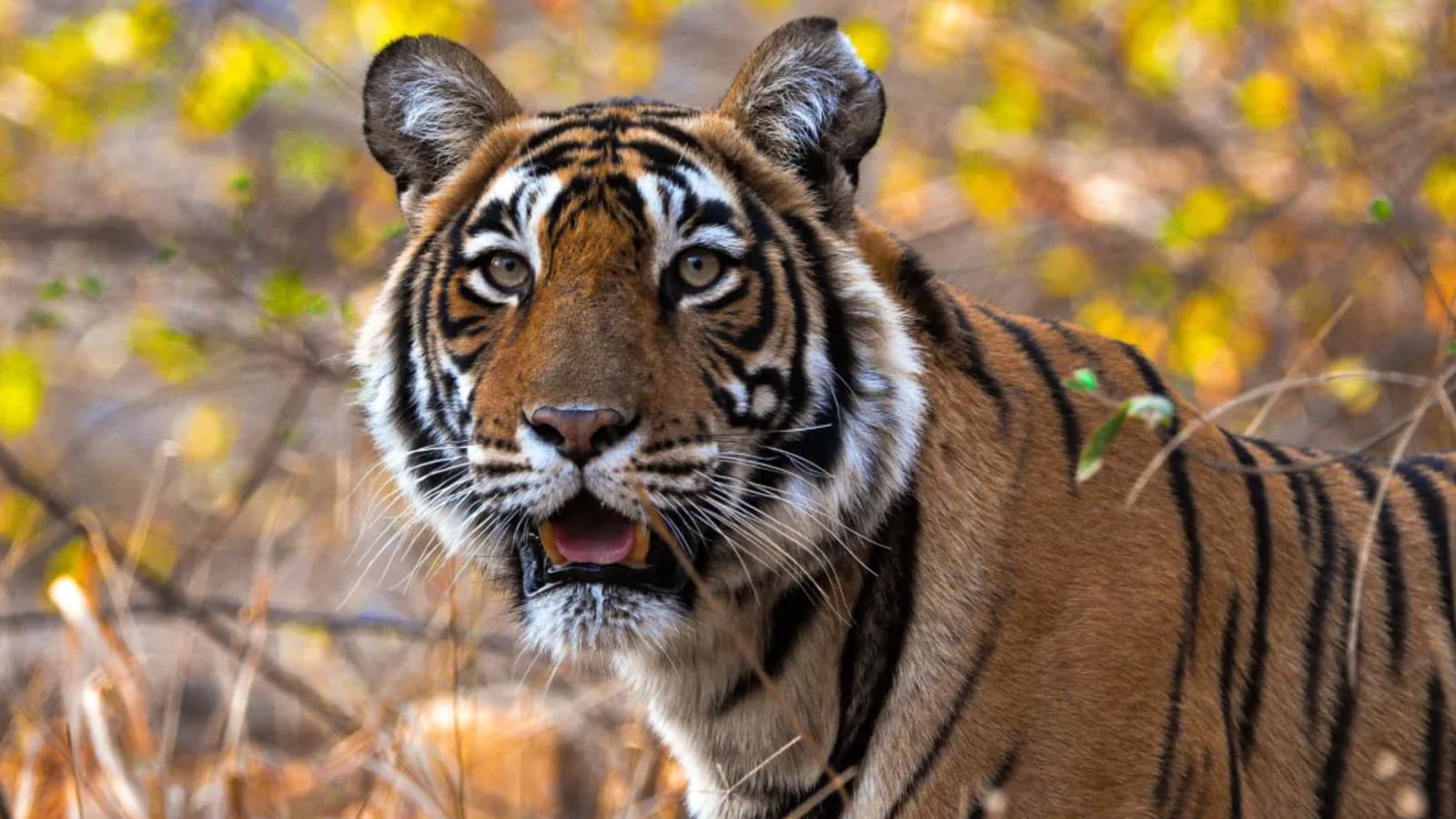
Tigers in daylight, a thousand-year-old fort on the ridge and lakes that pull everything in by mid-morning. Mirza grew up at the park gate — this is where most of his trips begin.
Why tigers here don't hide
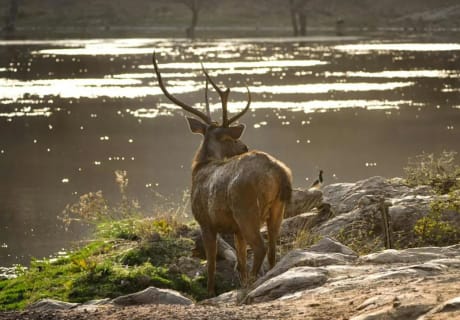
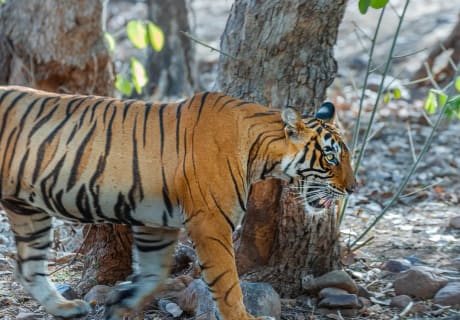
Ranthambore was a royal hunting ground for centuries, and its tigers have lived alongside jeeps for generations. The forest is dry deciduous — open by March — so animals are seen moving in full daylight around Padam Talao, Rajbagh and Malik lakes.
The reserve is split into ten zones. Zones 1–6 form the core, closed July to September for the monsoon; zones 7–10 are buffer, open most of the year. The forest department allots zones — Mirza books the one with the best recent movement among what's open.
Ranthambhore Fort built
A hilltop fort rises above the forest; the land around it becomes royal hunting country for the rulers of Jaipur.
Declared a wildlife sanctuary
The forests around the fort are given formal protection for the first time.
Project Tiger launched
Ranthambore is chosen as one of the first reserves under India’s national tiger-conservation programme.
Upgraded to a National Park
The core zones gain the highest level of legal protection.
Sawai Man Singh Sanctuary added
Adjoining forests expand the wider tiger landscape.
A global tiger destination
Among the most reliable places on earth to watch wild tigers move in daylight, amongst standing ruins.
Ten zones, ten different parks
Zone allocation is made by the Forest Department through a computerised system — never by an operator. Anyone guaranteeing you a specific zone is guessing.
Hilly, dense
Borders the buffer; good for tigress-with-cub movement.
Lakes & hills
Consistently among the highest sighting rates in the park.
Lakes & ruins
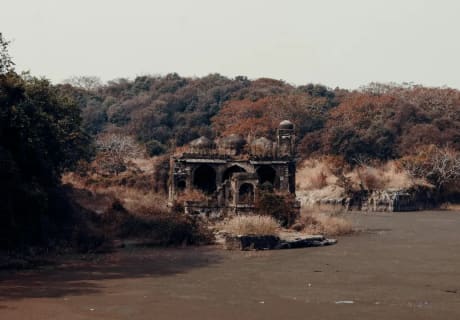
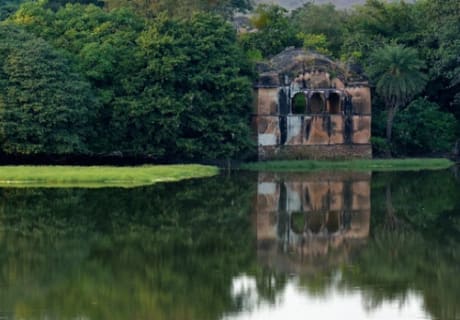
Padam Talao, Rajbagh ruins and Jogi Mahal. The classic Ranthambore.
Valleys & lakes
Malik Talao and Lakarda. Historically strong for large males.
Open plateau
Kachida edge and Anantpura. Open country, long sightlines.
Open grassland
Kundal area. Excellent for raptors and open-country species.
Rugged, sparse
Chidikho. Quieter drives; rewards patience.
Rolling, wooded
Balas and Neemli Dang. Good all-round wildlife density.
River valley
Kuwalji, along the Banas. Sloth bear and aquatic birdlife.
Open, undulating
Aantri. Known for tigress territories at the reserve edge.
Zones 2, 3 and 4 hold the lakes, and the lakes hold the prey — so they carry the strongest historical sighting records. But every zone in Ranthambore has resident tigers, and a quiet drive in zone 3 is far more common than a spectacular one in zone 7. Book the reserve, not the zone.
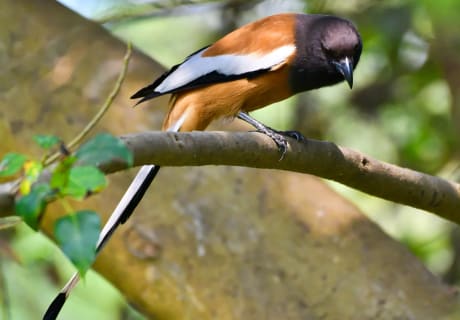
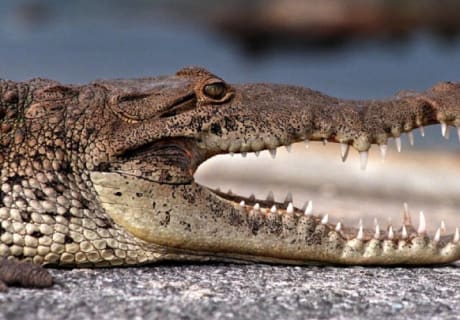
What to see around Ranthambore National Park
Within the reserve
Beyond the gates
Per seat, per drive
Government rates. Lodge, transfers and a naturalist are quoted separately on request.
Gypsy
6 seats · open jeepIndian nationals
Foreign nationals
Quicker off the mark, better angles for photography. Book the whole jeep for a private drive.
Canter
20 seats · open busIndian nationals
Foreign nationals
Lower cost, same zones. A good choice for families and larger groups.
Journeys through Ranthambore National Park
Field notes


Other reserves Mirza arranges
All destinations →How do I book a Ranthambore safari?
Send your date, number of guests and whether you want a Gypsy or a canter — through the form, WhatsApp or a call. Mirza checks live availability and confirms, usually the same day.
How far ahead should I book?
Permits open months ahead and the good zones go first. For December to February, book as early as you can; for last-minute dates call rather than email — cancellations do come up.
Gypsy or canter — which should I take?
A Gypsy seats six, is quicker off the mark and better for photography. A canter seats twenty and costs less. Both enter the same zones.
Can I choose my zone?
You can ask, and Mirza will push for it, but zones are allotted by the forest department. He books the zone with the best recent movement among what is open.
What does a safari seat cost?
Ranthambore government rates are ₹2,500 per person for a Gypsy and ₹1,500 for a canter (₹4,500 and ₹3,500 for foreign nationals). Lodge, transfers and naturalist are quoted on top.
Do you arrange other parks too?
Yes — Tadoba, Corbett, Sariska, Jawai and Mukundra as well, though Ranthambore is home ground and where most trips start.