Introduction
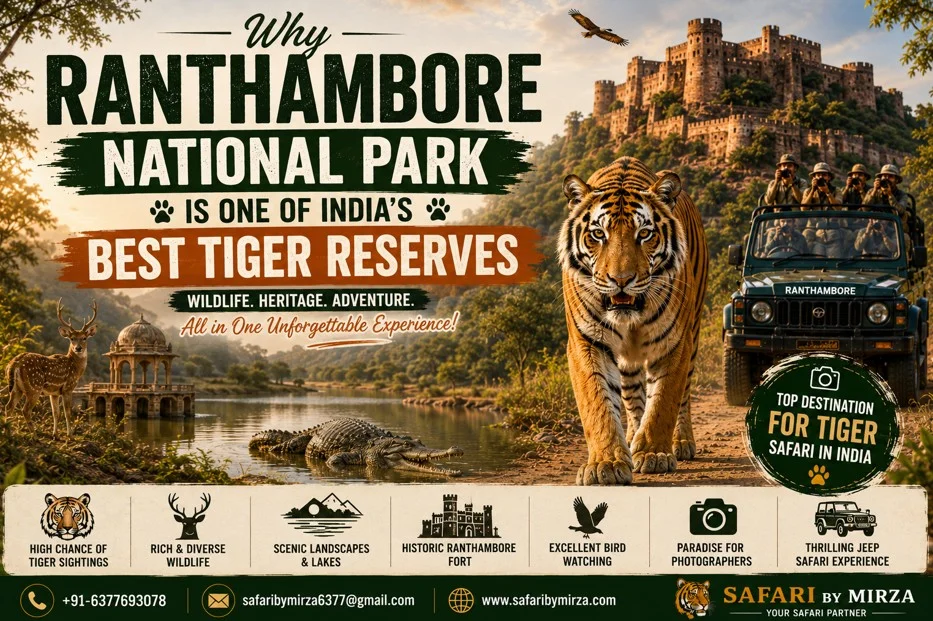
When people think about wildlife safaris in India, Ranthambore National Park is often one of the first destinations that comes to mind. Located in Rajasthan’s Sawai Madhopur region, Ranthambore is renowned for its Royal Bengal Tigers, diverse wildlife, dramatic landscapes, lakes, forests, and historic architecture.
But what makes Ranthambore such a special tiger safari destination?
The answer lies in the combination of wildlife, habitat, accessibility, history, and the unique safari experience the reserve offers. Rajasthan Tourism highlights Ranthambore as a major wilderness destination known for opportunities to see tigers in their natural habitat.
In this guide, we’ll explore the reasons why Ranthambore National Park is one of India’s best-known tiger reserves and why it deserves a place on every wildlife enthusiast’s travel list.
1. Ranthambore Has a Long Tiger Conservation History
Ranthambore has played an important role in India’s tiger conservation story for decades.
The reserve was among the original wildlife areas selected under Project Tiger, launched by the Government of India in 1973. Ranthambore National Park was notified in 1980, and the larger tiger reserve later incorporated additional protected areas and surrounding landscapes.
This long conservation history has helped establish Ranthambore as an important destination for tiger conservation and wildlife tourism.
Why Is Tiger Conservation Important?
Tiger reserves provide protected habitats where tigers and other wildlife can survive with reduced human disturbance.
Ranthambore’s conservation landscape includes:
- Core protected areas
- Buffer areas
- Forest habitat
- Wildlife corridors
- Water sources
- Prey species
Protecting these areas is essential for maintaining healthy wildlife populations.
2. Excellent Opportunities for Tiger Sightings
The biggest attraction of Ranthambore is undoubtedly the Royal Bengal Tiger.
The park’s combination of dry forest, open areas, rocky terrain, and water bodies can provide excellent opportunities for observing wildlife.
Tigers may sometimes be seen:
- Near lakes
- Crossing forest tracks
- Resting in shaded areas
- Moving through grasslands
- Around water sources
- Near rocky terrain
However, it is important to remember that no safari can guarantee a tiger sighting.
Why Are Tiger Sightings Unpredictable?
Tigers are wild animals and their movements depend on natural conditions such as:
- Weather
- Water availability
- Territory
- Prey movement
- Time of day
- Natural behavior
This unpredictability is part of what makes a wildlife safari exciting.
3. A Unique Dry Deciduous Forest Landscape
Ranthambore looks very different from many other Indian tiger reserves.
The landscape features dry deciduous forests, rocky hills, grasslands, lakes, and seasonal watercourses.
This creates a visually dramatic environment for wildlife watching and photography.
What Can You See During a Safari?
Depending on your safari route, you may travel through:
- Forest tracks
- Rocky valleys
- Open grasslands
- Lakeside areas
- Dry woodland
- Historic ruins
Every route can provide a different perspective of Ranthambore’s wilderness.
4. Wildlife Beyond Tigers
One of the biggest reasons to visit Ranthambore is that the experience isn’t limited to tiger sightings.
The reserve supports a wide range of mammals, reptiles, and birds.
Some wildlife you may encounter includes:
- Leopard
- Sloth Bear
- Striped Hyena
- Jackal
- Chital
- Sambar Deer
- Nilgai
- Wild Boar
- Hanuman Langur
- Rhesus Macaque
- Mugger Crocodile
Why Is Ranthambore Good for Wildlife Lovers?
Even when a tiger remains hidden, a safari can provide opportunities to observe many other species.
Every safari can offer something different, from a herd of deer to a crocodile beside a lake or a bird of prey flying overhead.
5. Incredible Birdwatching Opportunities
Ranthambore is also an excellent destination for bird lovers.
The reserve’s forests, grasslands, lakes, and water bodies support a wide variety of bird species.
Birds You May Spot in Ranthambore
Depending on the season and location, you may encounter:
- Indian Peafowl
- Kingfishers
- Eagles
- Herons
- Storks
- Vultures
- Parakeets
- Owls
Birdwatching adds another dimension to the Ranthambore safari experience.
6. Ranthambore Fort Adds a Historic Dimension
Few tiger safari destinations offer such a dramatic combination of wildlife and history.
Ranthambore Fort rises above the surrounding landscape and is an important heritage attraction in the region.
The fort dates back centuries and contains historic gates, temples, tanks, massive walls, and other architectural features.
Why Visit Ranthambore Fort?
Visitors can enjoy:
- Historic architecture
- Panoramic views
- Ancient temples
- Photography opportunities
- Cultural experiences
This makes it possible to combine wildlife and heritage tourism during the same trip.
7. Lakes Create Excellent Wildlife Viewing Areas
Water is extremely important in Ranthambore’s dry landscape.
The reserve contains several lakes and water bodies that attract wildlife and create scenic safari locations.
Wildlife Around Water Bodies
Visitors may encounter:
- Tigers
- Sambar Deer
- Chital
- Crocodiles
- Birds
- Langurs
- Wild Boars
Water bodies can also provide excellent opportunities for wildlife photography.
8. Ranthambore Is Excellent for Wildlife Photography
Ranthambore is particularly attractive to wildlife photographers because it combines animals with dramatic landscapes.
A single photograph may include:
- A Royal Bengal Tiger
- Rocky terrain
- Ancient ruins
- Forest vegetation
- A lake
- Historic architecture
Photography Tips for Ranthambore
For a better wildlife photography experience:
- Carry a suitable zoom or telephoto lens.
- Keep your camera ready.
- Avoid using flash unnecessarily.
- Follow your guide’s instructions.
- Never disturb wildlife for a photograph.
- Be patient.
The best wildlife photographs are usually captured when animals behave naturally.
9. A Great Destination for First-Time Safari Visitors
Ranthambore can be an excellent introduction to wildlife safaris for travelers who have never visited a tiger reserve.
A typical safari allows visitors to experience:
- Open safari vehicles
- Forest tracks
- Wildlife tracking
- Bird calls
- Animal alarm calls
- Natural landscapes
- Historic ruins
Who Should Visit Ranthambore?
Ranthambore is suitable for:
- Families
- Couples
- Solo travelers
- Wildlife photographers
- Birdwatchers
- International tourists
- Adventure travelers
Ranthambore Is Relatively Accessible
Another advantage is its accessibility.
Ranthambore is located near Sawai Madhopur, which has railway connectivity with several major Indian cities.
The destination is also accessible by road from cities such as Jaipur and Delhi.
Popular Destinations to Combine With Ranthambore
You can combine a Ranthambore trip with:
- Jaipur
- Delhi
- Agra
- Kota
- Other Rajasthan destinations
This makes Ranthambore convenient to include in a larger Rajasthan or North India itinerary.
11. Ranthambore Is Part of a Larger Conservation Landscape
Ranthambore is more than an isolated national park.
The wider tiger reserve includes core and buffer areas that form part of a larger conservation landscape.
Why Are Buffer Areas Important?
Buffer areas can help:
- Reduce pressure on core habitats
- Provide additional wildlife habitat
- Support ecological connectivity
- Reduce human-wildlife conflict
- Strengthen long-term conservation
This broader approach is important for protecting tiger populations and their habitats.
12. Wildlife and Heritage Come Together
Many wildlife destinations primarily focus on nature.
Ranthambore offers a combination of:
Wildlife
Royal Bengal Tigers, leopards, sloth bears, deer, crocodiles, birds, and more.
Nature
Dry forests, hills, grasslands, lakes, and valleys.
History
Ranthambore Fort, temples, ruins, and historic structures.
Culture
Rajasthan’s local traditions, food, hospitality, and heritage.
This combination makes Ranthambore attractive to travelers with different interests.
13. Every Safari Can Be Different
One of the most exciting aspects of wildlife tourism is unpredictability.
You may see a tiger during your first safari.
Or you may spend several hours observing deer, birds, crocodiles, monkeys, and landscapes without seeing a tiger.
The next safari could be completely different.
Don't Judge Your Safari Only by Tiger Sightings
Instead of treating the safari as only a tiger search, enjoy the complete ecosystem.
Look for:
- Birds
- Deer
- Crocodiles
- Monkeys
- Landscapes
- Forest sounds
- Other predators
The forest itself is part of the experience.
14. Ranthambore Supports Responsible Wildlife Tourism
Ranthambore’s tourism is regulated to balance visitor experiences with wildlife conservation.
Visitors can contribute positively by following responsible tourism practices.
Responsible Safari Practices
Always:
- Maintain a safe distance from wildlife.
- Avoid loud noises.
- Never feed animals.
- Don’t litter.
- Follow your guide’s instructions.
- Stay inside authorized safari areas.
- Respect restricted areas.
- Avoid disturbing animals for photographs.
Responsible tourism helps protect the destination for future generations.
15. It Is an Important Destination for Tiger Enthusiasts
For travelers interested in India’s tiger conservation story, Ranthambore is a particularly meaningful destination.
Its long association with Project Tiger and its continued role as a recognized tiger reserve make it an important part of India’s wildlife conservation landscape.
What Can Visitors Learn?
A Ranthambore safari can help visitors understand:
- Tiger conservation
- Wildlife habitats
- Predator-prey relationships
- Forest ecosystems
- Responsible tourism
- Biodiversity
Best Time to Visit Ranthambore
Ranthambore generally attracts visitors during the main safari season from October through June.
October to February
This period generally offers more comfortable temperatures.
It can be a good choice for:
- Families
- General sightseeing
- Birdwatching
- Comfortable safari experiences
March to June
The warmer months can provide interesting wildlife-viewing opportunities, particularly around available water sources.
This period is popular with travelers interested in tiger and wildlife photography.
Always check the latest official safari availability and seasonal regulations before your trip.
How Many Safaris Should You Take?
There is no fixed number of safaris that guarantees a tiger sighting.
However, spending more time in Ranthambore provides additional opportunities to experience different safari routes and wildlife conditions.
Recommended Stay
For first-time visitors, a 2-night or 3-night stay can provide enough time for multiple safari sessions and nearby sightseeing.
Multiple safaris also allow you to experience different times of day and potentially encounter different wildlife.
Why Choose a Ranthambore Jeep Safari?
A Jeep or Gypsy safari is popular with:
- Couples
- Small families
- Wildlife photographers
- Small groups
- Travelers seeking a more personalized experience
Benefits of a Jeep Safari
A smaller safari vehicle can provide:
- Better visibility
- Smaller group size
- Photography flexibility
- A more personal safari experience
The best vehicle depends on your group size, budget, availability, and preferences.
Ranthambore vs Other Tiger Reserves
India has many excellent tiger reserves, and each offers a different wildlife experience.
Ranthambore stands out because of its combination of:
| Feature | Ranthambore |
|---|---|
| Tiger Safari | Excellent |
| Dry Deciduous Landscape | Yes |
| Historic Fort | Yes |
| Lakes & Water Bodies | Yes |
| Wildlife Diversity | High |
| Birdwatching | Excellent |
| Photography | Excellent |
| Accessibility | Convenient |
| Heritage + Wildlife | Exceptional |
Is Ranthambore Really the Best Tiger Reserve in India?
Calling one reserve “the best” is subjective because India has many outstanding tiger reserves.
However, Ranthambore’s combination of tiger sightings, open landscapes, biodiversity, heritage, and accessibility makes it one of India’s most distinctive and popular tiger safari destinations.
Tips for Your First Ranthambore Safari
Before your visit:
- Book your safari in advance.
- Carry valid identification.
- Choose a safari vehicle according to your requirements.
- Consider booking multiple safari sessions.
- Carry binoculars.
- Bring a camera with a suitable zoom lens.
- Wear comfortable clothing.
- Follow all park rules.
- Never feed or disturb wildlife.
- Be patient.
Most importantly, don’t judge your safari only by whether you see a tiger.
The forest itself is the experience.
Why Book Your Ranthambore Safari with Safari by Mirza?
Planning a wildlife trip can involve several details, including safari availability, vehicle selection, travel dates, and itinerary planning.
Safari by Mirza provides safari booking assistance for travelers planning their Ranthambore adventure.
Our Safari Assistance Includes
- Ranthambore safari booking assistance
- Jeep/Gypsy safari options
- Canter safari options
- Safari planning guidance
- Travel assistance
- Customer support
Contact Safari by Mirza
Phone: +91-6377693078
Email: safaribymirza6377@gmail.com
Plan your Ranthambore trip in advance and prepare for an unforgettable wildlife experience.
Frequently Asked Questions
Why is Ranthambore famous?
▼
Ranthambore is famous for its Royal Bengal Tigers, diverse wildlife, dry deciduous landscapes, scenic lakes, and historic Ranthambore Fort.
Is Ranthambore one of India's tiger reserves?
▼
Yes. Ranthambore Tiger Reserve is an officially recognized tiger reserve in Rajasthan and is part of India's national tiger conservation framework.
Is Ranthambore good for tiger sightings?
▼
Ranthambore is well known for opportunities to see tigers in the wild. However, sightings are never guaranteed because tigers move freely within their natural habitat.
What other animals can I see in Ranthambore?
▼
Depending on the safari and season, visitors may see leopards, sloth bears, hyenas, deer, nilgai, wild boars, crocodiles, langurs, jackals, and many bird species.
What makes Ranthambore different from other tiger reserves?
▼
Its combination of tiger habitat, dry deciduous forests, rocky terrain, lakes, biodiversity, historic ruins, and Ranthambore Fort creates a distinctive wildlife-and-heritage experience.
How long should I stay in Ranthambore?
▼
A 2-night or 3-night trip is a practical choice for first-time visitors who want enough time for multiple safari sessions and nearby sightseeing.
Final Thoughts
Ranthambore National Park is one of India’s most distinctive tiger safari destinations because it combines wildlife, conservation, history, and dramatic landscapes in one destination.
The possibility of seeing a Royal Bengal Tiger is undoubtedly the biggest attraction, but Ranthambore offers much more. Leopards, sloth bears, deer, crocodiles, birds, lakes, forests, rocky hills, and ancient ruins all contribute to the experience.
Its conservation history, association with Project Tiger, diverse habitat, and accessibility have helped establish Ranthambore as an internationally recognized wildlife destination.
If you’re planning a tiger safari in Rajasthan, Ranthambore deserves serious consideration.
Plan your Ranthambore Safari with Safari by Mirza.
Phone: +91-6377693078
Email: safaribymirza6377@gmail.com


